Dietary Fibre and Health
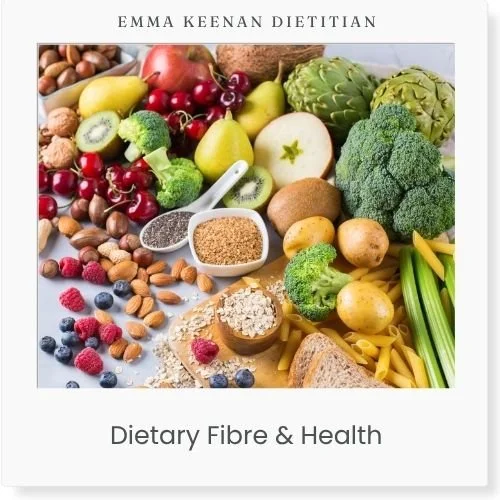
As a dietitian, I often see clients focusing on protein, while overlooking carbohydrates the “forgotten” macronutrient, especially those containing dietary fibre. Far from being just “roughage” that helps keep your bowels regular, fibre is a complex powerhouse that fuels your microbiome and helps to prevent chronic disease.
What is Dietary Fibre?
Dietary fibre is a type of carbohydrate found in plant foods that the human body cannot digest or absorb. Unlike, starches or sugars, which broken down into glucose, fibre passes through the small intestine relatively intact. Once it reaches the large intestine, it is fermented by gut bacteria, releasing beneficial compounds that support overall health.
The Best Food Sources of Fibre
To meet your daily requirements, focus on these five categories of plant-based foods:
Whole grains: Wholemeal and wholegrain breads, oats, barley, and quinoa.
Legumes: Lentils, chickpeas, and black beans.
Vegetables: Broccoli, carrots and leafy greens.
Fruits: Berries, kiwi fruit, and pears.
Nuts & Seeds: Chia seeds, flaxseeds, and walnuts.
The 3 Types of Fibre: Soluble, Insoluble, and Prebiotic
Not all fibres work the same way. Fibres have different properties that determine how they behave in the gastrointestinal tract that are categorised as solubility, viscosity, and fermentability. Including a balance of all three types in our diet helps to maintain a healthy gastrointestinal tract.
Soluble Fibre
Soluble fibre dissolves in water to form a gel-like substance. It acts like a sponge in your digestive tract.
Benefits: Keeps you fuller for longer, stabilises blood sugar, and lowers LDL (“bad”) cholesterol.
Top Foods: Oats, barley, peeled fruits, and legumes.
Insoluble Fibre
Insoluble fibre does not dissolve in water. It adds bulk to your stool and speeds up the passage of waste.
Benefits: Prevents constipation, supports regular bowel movements, and reduces the risk of diverticular disease.
Top Foods: Grainy breads, fruit with peel, nuts, and seeds,
Prebiotic Fibre
Prebiotics are a specific type of fibre that act as “food” for your beneficial gut microbes.
Benefits: Strengthens the immune system, reduces inflammation, and may protect against colon cancer.
Top Foods: Garlic, onions, leeks, asparagus, and cooked-then-cooled potatoes.
Why Fibre is Essential for Health?
Dietary fibre is essential for human health, not only due to its physical properties but also because of its impact on the gut microbiota. It’s so important that it is considered one of the five macronutrients—nutrients required in large amounts for health—including carbohydrates, protein, fat, fibre, and water.
Gut Health: Helps to normalise bowel movements, preventing constipation, diarrhoea and diverticular disease.
Heart Health: Lowers blood pressure and improves cholesterol levels.
Mental Health: Supports the gut-brain axis and the production of neurotransmitters like serotonin and dopamine.
Bone Health: Enhanced calcium absorption.
Metabolic Health: Increased satiety, improved blood sugar levels and insulin sensitivity.
Gut Microbiota: Increases beneficial “good” bacterial populations, supports immune function, reduces inflammation and increases nutrient absorption.
Are You Eating Enough Fibre?
In Australia, the gap between recommended intake and reality is significant. Research shows that fewer than 1 in 3 Australian adults meet the Adequate Intake (AI) for fibre.
Daily Fibre Recommendations
| Category | Adequate Intake (AI) | Suggested Target (For Disease Prevention) |
|---|---|---|
| Males | 30g / day | 38g / day |
| Females | 25g / day | 28g / day |
Dietitian Tip: If you are currently part of the 70% of Australians not meeting your targets, don’t double your intake overnight! Increase your fibre slowly and drink plenty of water to avoid temporary bloating and gas.
Top Fibre Foods to Add to Your Grocery List
For Soluble Fibre: Berries, smooth nut butters, and oats.
For Insoluble Fibre: Unpeeled vegetables, and whole-grain cereals.
For Prebiotics: Green bananas, blueberries, and artichokes.
Ready to Transform Your Gut Health
But not sure where to start?
Learn More About Gut Health
References
Cronin, P., Joyce, S. A., O'Toole, P. W., & O'Connor, E. M. (2021). Dietary Fibre Modulates the Gut Microbiota. Nutrients, 13(5), 1655. https://doi.org/10.3390/nu13051655
Fayet-Moore, F., Cassettari, T., Tuck, K., McConnell, A., & Petocz, P. (2018). Dietary Fibre Intake in Australia. Paper I: Associations with Demographic, Socio-Economic, and Anthropometric Factors. Nutrients, 10(5), 599. https://doi.org/10.3390/nu10050599
National Health and Medical Research Council. (n.d.). Dietary fibre. Nutrient reference values for Australia and New Zealand. Retrieved January 19, 2025.
Ramsteijn, A. S., & Louis, P. (2024). Dietary fibre optimisation in support of global health. Microbial biotechnology, 17(8), e14542. https://enviromicro-journals.onlinelibrary.wiley.com/doi/10.1111/1751-7915.14542