
Lactose Intolerance Symptoms & Causes

What Is Lactose?
Lactose is a type of sugar (carbohydrate) found naturally in mammalian milk. It is a disaccharide, meaning it consists of two sugar molecules: glucose and galactose, joined together.
Carbohydrates must be broken down into monosaccharides (single sugar molecules) before they can be absorbed in the small intestine. The enzyme lactase is responsible for breaking lactose into glucose and galactose so they can be absorbed into the bloodstream.
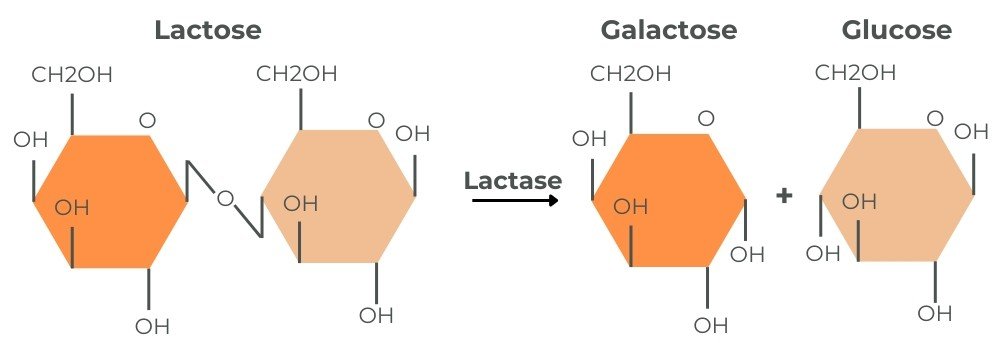
Lactose broken down by lactase into galactose and glucose.
What Is Lactase?
Lactase, also called lactase-phlorizin hydrolase (LPH), is an enzyme located on the surface of the small intestine. Its role is to break down lactose into glucose and galactose, allowing proper digestion and absorption.
What Is Lactose Intolerance?
Lactose intolerance occurs when the body does not produce enough lactase to fully digest lactose. As a result, lactose passes undigested into the large intestine, where it can cause digestive symptoms.
Why Symptoms Occur
Two normal physiological processes contribute to symptoms:
1. Osmotic effect
Undigested lactose draws water into the intestine, increasing fluid content and speeding up bowel movements.
2. Fermentation by gut bacteria
Gut bacteria ferment the lactose, producing gas and short-chain fatty acids. This can lead to bloating and abdominal distension.
Lactose Intolerance Symptoms
Symptoms vary depending on the amount of lactose consumed and the level of lactase deficiency. Many people can tolerate up to 12 grams of lactose (approximately one cup of milk).
Common symptoms include:
Abdominal cramping and pain
Bloating and abdominal distention
Excess gas
Stomach gurgling
Loose stools
Diarrhoea
Less common symptoms:
Nausea
Constipation
Symptoms typically appear when lactase activity falls below approximately 50%.
What Causes Lactose Intolerance?
1. Primary Lactase Deficiency
This is the most common type. Lactase production naturally declines after infancy, once breastfeeding ends.
Prevalence varies widely between populations due to genetic differences.
Higher prevalence is seen in:
Asian populations
African populations
Hispanic populations
Indigenous populations
Lower prevalence is seen in:
Northern European populations
2. Secondary (Temporary) Lactase Deficiency
This occurs when the small intestine is damaged by illness or medical conditions.
Common causes include:
Infections: Gastroenteritis, Giardia
Medical conditions: Coeliac disease, Crohn’s disease
Surgery: Gastric bypass, intestinal surgery
Other causes: Radiation therapy, cystic fibrosis
This form may improve once the underlying condition is treated.
3. Congenital Lactase Deficiency (Rare)
This is a rare genetic condition where babies are born without the ability to produce lactase. Symptoms appear shortly after birth when milk feeding begins.
4. Developmental Lactase Deficiency
Premature infants may temporarily have reduced lactase production because the digestive system is not fully developed. This usually improves with maturity.
How Is Lactose Intolerance Diagnosed?
Dietary Challenge
Symptoms are monitored after consuming lactose, followed by a period of elimination and reintroduction.
Hydrogen Breath Test
This test measures hydrogen gas in the breath after consuming lactose. Elevated levels indicate lactose malabsorption.
Jejunal Biopsy
This invasive test directly measures lactase activity but is rarely used.
Genetic Testing
This can identify genetic predisposition to lactase deficiency but does not measure symptom severity or tolerance levels.
Dairy and Bone Health
Why is Dairy Important?
Dairy products are one of the richest sources of calcium in the diet and also provide:
Protein
Vitamin B12
Vitamin A
Riboflavin
Calcium
Phosphorus
Magnesium
Zinc
Removing dairy without appropriate alternatives increases the risk of calcium deficiency.
Why Does Calcium Matter?
Calcium is essential for:
Building and maintaining strong bones and teeth
Muscle contraction
Nerve function
Heart function
Blood clotting
Approximately 99% of calcium is stored in bones and teeth.
If calcium intake is inadequate, the body takes calcium from bones to maintain blood levels, which can weaken bones over time.
Peak bone density is reached in early adulthood, after which bone loss gradually occurs, particularly in women after menopause.
Osteoporosis and Bone Health
Osteoporosis is a condition where bones become fragile and more likely to fracture.
It affects approximately 1.2 million Australians, with millions more experiencing low bone density.
It is often called a “silent disease” because there are no symptoms until a fracture occurs.
Diagnosis is made using a DEXA scan, which measures bone density.
Management of Lactose Intolerance
Complete avoidance of dairy is usually unnecessary. Most people can tolerate some lactose.
Management options include:
Lactose-free milk and yoghurt
Hard cheeses, which are naturally low in lactose
Lactase enzyme supplements or drops
Consuming lactose with meals to improve tolerance
What To Do If Dairy Causes Symptoms
Consult your GP to rule out underlying medical conditions.
Work with a dietitian to identify whether lactose or another dietary factor is causing symptoms.
Tolerance varies based on:
Individual lactase production
Amount of lactose consumed
Other foods eaten at the same time
Gut microbiome composition
Gut sensitivity and motility
Key Points
Lactose intolerance does not require complete dairy avoidance.
Lactose intolerance does not cause damage to the intestine.
Dairy provides essential nutrients, particularly calcium.
Inadequate calcium intake increases the risk of osteoporosis and fractures.
A personalised approach helps maximise tolerance while maintaining nutrition.
Discover More Dietitian Articles
References
Healthy Bones Australia. (n.d.). Retrieved December 2, 2024, from https://healthybonesaustralia.org.au/
Heyman, M. B., & Committee on Nutrition. (2006). Lactose intolerance in infants, children, and adolescents. Pediatrics, 118(3), 1279–1286.
Leis, R., de Castro, M. -J., de Lamas, C., Picáns, R., & Couce, M. L. (2020). Effects of Prebiotic and Probiotic Supplementation on Lactase Deficiency and Lactose Intolerance: A Systematic Review of Controlled Trials. Nutrients, 12(5), 1487.
Rachwał, K., Wielgus, K., Bator, P., Razik, W., Łyko, G., Antos, M., Furgalska, J., Pawłowska, M., & Wawryszuk, A. (2024). Lactase Deficiency and Lactose Intolerance: Current Understanding and Future Directions. Journal of Education, Health and Sport, 69, 49393.
Wanes, D., Husein, D. M., & Naim, H. Y. (2019). Congenital Lactase Deficiency: Mutations, Functional and Biochemical Implications, and Future Perspectives. Nutrients, 11(2), 461.