
Could it be Coeliac Disease?
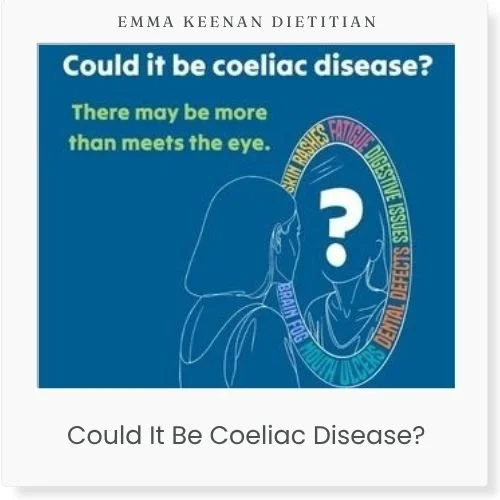
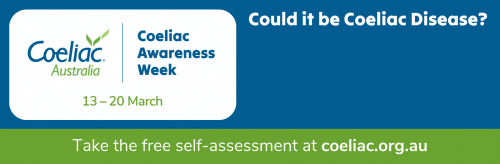
It’s Coeliac Disease Awareness Week and approximately 1 in 70 Australians have coeliac disease, however up to 80% of cases remain undiagnosed.
Coeliac Australia has developed a free self-assessment quiz to check to see if your symptoms could be coeliac disease. It only takes three minutes to learn if you are at risk and what to do next.
Self-Assessment Tool - Coeliac Australia
If you’re thinking about going gluten-free make sure you read this article first.
What is Coeliac Disease?
Coeliac disease is a chronic autoimmune condition, that is triggered by gluten in individuals who are genetically susceptible.
Who Can Develop Coeliac Disease?
Coeliac disease can occur at any age and affects males and females of all ethnic backgrounds.
Symptoms of Coeliac Disease
Persistent gastrointestinal symptoms e.g., diarrhoea, constipation, nausea, vomiting, flatulence/gas, cramping (not menstrual cramps), bloating, abdominal pain, steatorrhea (fatty, floaty poo)
Unexpected weight loss
Ongoing or unexpected problems with your gut, such as constipation, loose stools, feeling sick (Nausea), vomiting or excessive wind (flatulence)
Delayed growth in children
Severe or persistent mouth ulcers
Prolonged fatigue (“feeling tired all the time” or “out of sorts”), weakness and lethargy
Faltering growth (or failure to meet growth milestone in children)
Skin rashes such as dermatitis herpetiformis
Unexplained iron deficiency or iron deficiency anaemia
Unexplained vitamin B12 or folate deficiency
Family History of Coeliac Disease
If you have a first degree relative diagnosed with coeliac disease you have a 10% chance of also having coeliac disease. Immediate relatives of someone with coeliac disease should always be screened.
First degree relatives include, your:
Parents
Siblings
If one identical twin is diagnosed with coeliac disease there is a 70% chance the other twin will also have coeliac disease.
Children
Other Risk Factors and Associated Conditions
If your doctor has diagnosed you with the following conditions, screening for coeliac disease should also be considered:
Irritable Bowel Syndrome (IBS)
Low bone density (osteopenia or osteoporosis)
Type 1 diabetes (insulin dependent)
Autoimmune thyroid disease (Graves’ or Hashimoto’s)
Peripheral neuropathy (nerve damage causing altered sensation, tingling or pain)
Ataxia (loss of coordination or balance)
Infertility or reduced fertility
Recurrent miscarriage
Unexplained persistently raised/abnormal liver enzymes
Enamel defects on teeth
Down’s syndrome
Turner syndrome
Screening for Coeliac Disease
DO NOT remove gluten before getting tested!
The most important part of coeliac disease testing is continuing to consume gluten/wheat products.
It is advised to consume 2-4 slices of wheat bread or equivalent daily for 6 weeks prior to testing.
Equivalent options include, 4-5 serves daily of the following gluten-containing foods:
1 wheat bread
1/2 English muffin
1/2 bread roll
1 Weet-Bix
1/2 cup wheat cereal
1/2 cup cooked wheat pasta
10 wheat crackers e.g., water crackers, Jatz
5 wheat crispbread e.g., Vita-Weat, Salada
2 wheat sweet biscuits e.g., Scotch Finger
Coeliac DIsease Testing
Step 1: Blood Test (“Coeliac Serology”)
The first step is a blood test that measures certain antibodies. Your doctor will request either:
Transglutaminase-IgA (tTG-IgA) AND deamidated gliadin peptide-IgG (DGP-IgG) antibody tests OR
Transglutaminase-IgA (tTG-IgA) antibody test AND the total IgA level
A positive result is not sufficient to diagnose coeliac disease, and a gastroscopy and biopsy is needed (Step 2).
Step 2: Gastroscopy with Small Intestinal Biopsy
This involves a simple procedure called a gastroscopy (endoscopy). While you’re sedated (asleep), a small camera on a thin tube is inserted through your mouth and stomach to your small intestine, where tiny tissue samples are collected for testing. The samples are then analysed under a microscope to confirm the diagnosis of coeliac disease.

How is Coeliac Disease Treated?
The only treatment for coeliac disease is a life-long gluten-free diet.
Dietitian SUpport for Coeliac Disease
Gluten-Free Diet Support
Guidance on successfully following a gluten-free diet
Understanding and interpreting food labels
Spotting hidden sources of gluten
Tips to prevent cross-contamination at home and when out and about
Advice for dining out, social events, and travel
Nutrition and Health
Identifying and correcting nutritional deficiencies
Support to ensure your gluten-free diet is balanced and nutritionally adequate
Managing Symptoms
Help to identify foods that may be triggering ongoing symptoms
Practical strategies to support long-term gut health
Explore Other Gut Health Articles